Author name: Suzana Smilevski

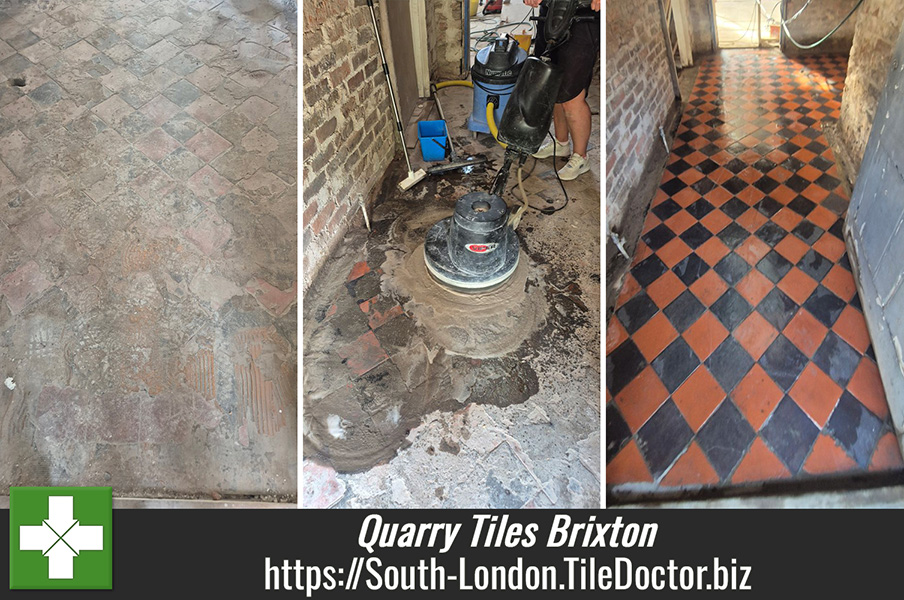
Red Black Checkerboard Quarry Tiled Hallway Floor Restoration Brixton

Heavily Contaminated Red & Black Quarry Tiled Floor Restored in Brixton

This beautiful traditional Red and Black checkerboard Quarry tiled floor at a property in Brixton had been completely covered by layers of cement, old adhesive, paint and general building residue, leaving very little of the original floor visible. Beneath all that contamination was a classic tiled floor with plenty of character and the owner was keen to see what could be done to restore it.
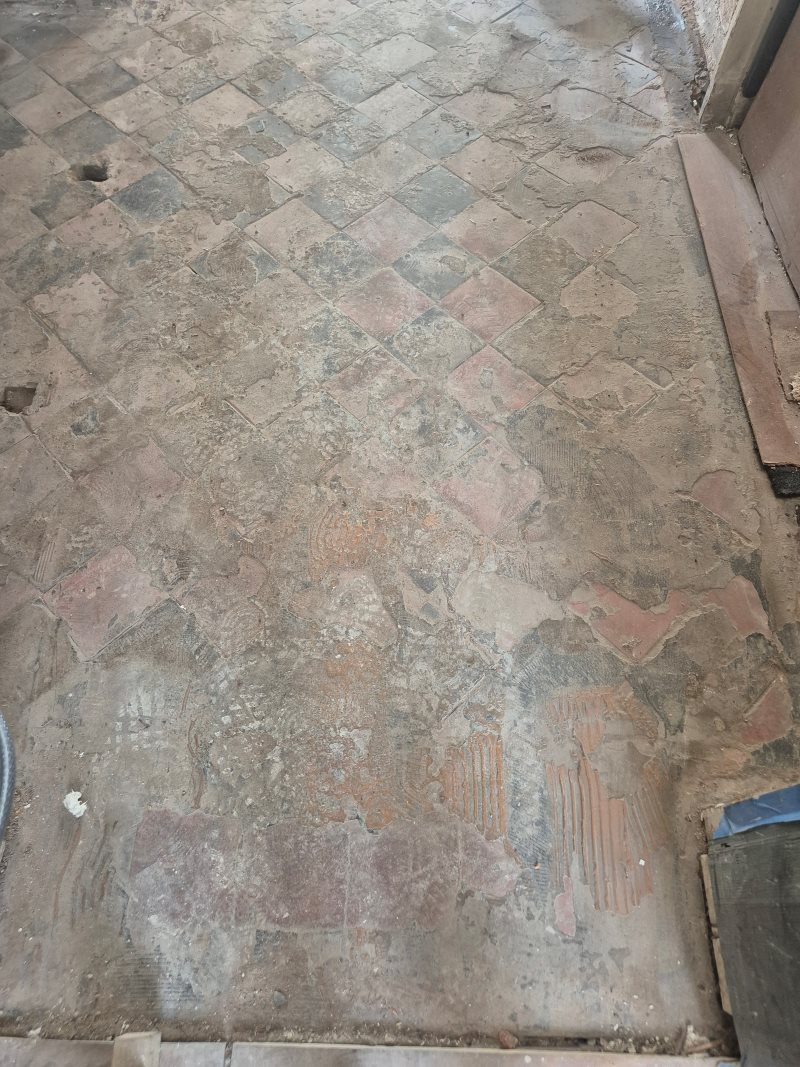
Red Black Checkerboard Quarry Tiled Hallway Floor Before Restoration Brixton

It’s difficult to quote for restoring a floor in this condition so I went over to survey its condition and run a few tests. The tests indicated which products and methods would have the best impact and from that I was able to create a detailed quote.

Happy with the quote and keen to restore an original feature to the property we were given the go ahead and a date scheduled to fit in with other trades who were working on the restoration of the property.

Removing Screed from Quarry Tiles

Work started by applying Tile Doctor Remove & Go, a multi-purpose stripper capable of tackling coatings, synthetic finishes, adhesives, paint and grout residues. It is also suitable for clay-based tiles such as these, including Victorian and Terracotta.

The product was applied to the floor and given time to soak into the various layers of contamination. Some areas were particularly stubborn, so we used a Silicon Carbide Brush to agitate the surface and work the product into the tiles. The soiling was then rinsed away with water and extracted with a wet vacuum.

In places where the cement and adhesive had formed a particularly thick layer it was carefully scraped away by hand first, gradually removing the residue without damaging the original tiles.

It was a slow and painstaking process which had to be repeated several times, carefully working through the layers one by one; as each layer was removed, more of the original red and black checkerboard pattern began to appear.

Once the heavier deposits had been dealt with using the Carbide Brush and careful scraping, the floor was worked with a black stripping pad to remove the remaining residue and ingrained dirt. This helped bring the surface back to a clean, even condition.
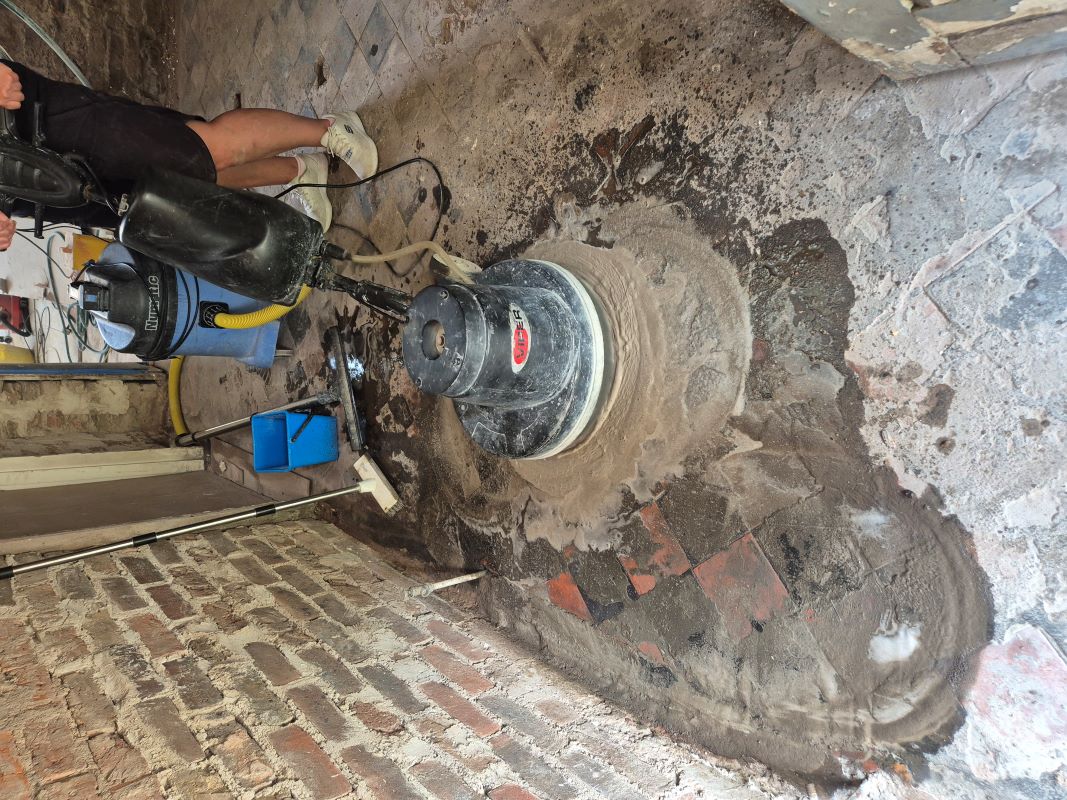
Red Black Checkerboard Quarry Tiled Hallway Floor During Restoration Brixton

In some areas, a melamine pad was also used to deal with remaining marks and fine surface residue, helping to achieve a consistently clean finish before the floor was thoroughly rinsed.

The porous nature of these traditional Quarry tiles meant that dirt had become deeply ingrained in the tile over the years, so the floor needed careful cleaning and agitation to bring it back as far as possible while retaining the natural character of the original tiles.

After three days of cleaning, brushing, scraping and mechanical cleaning, the floor was allowed to dry out completely so it would be ready for the final step of sealing.

Sealing Quarry Tiles

To seal and protect the restored quarry tiles several coats of Tile Doctor Seal & Go were applied leaving at least thirty minutes of drying time between each coat. This sealer is suitable for porous surfaces such as Quarry, Terracotta and Victorian and results in a low-sheen finish, helping to enhance the colour while protecting the floor from future staining, dirt and everyday wear.

Once finished the floor was completely transformed. What had initially appeared to be a floor covered beyond recognition was revealed as a beautiful traditional red and black checkerboard quarry tile floor. Sometimes the most rewarding floors to restore are the ones that have been hidden for years.
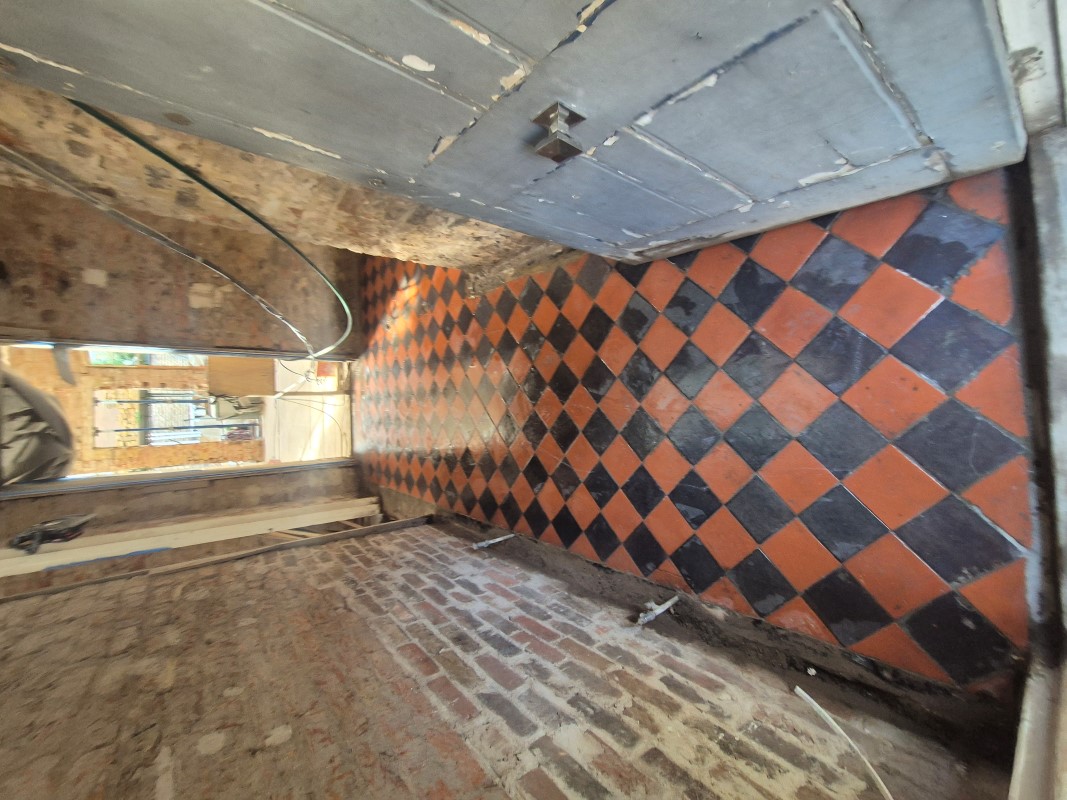
Red Black Checkerboard Quarry Tiled Hallway Floor After Restoration Brixton

Most importantly, the customer was absolutely delighted with the result. From the outset, their intention had been to retain as much of the property’s original features and character as possible, rather than replacing them with new materials.

For aftercare I recommended the use of Tile Doctor Neutral Tile Cleaner which is a ph neutral floor cleaner that’s safe to use on sealed surfaces. Unlike the stronger products you find in supermarkets it won’t degrade the sealer prematurely.


Quarry Tile Hallway Floor Restoration South London

Heavily Contaminated Red & Black Quarry Tiled Floor Restored in Brixton Read More »

Porcelain Tiled Kitchen Floor Cleaning Battersea

Deep Cleaning Textured Porcelain Tile and Grout in a Battersea Kitchen

We were contacted by a homeowner in Battersea who wanted a thorough deep clean of her Porcelain kitchen floor. Although Porcelain is a dense and durable material, this type had a slightly textured surface, and the grout lines had become noticeably darker over time.

Porcelain Tiled Kitchen Floor Before Deep Clean in Battersea

The textured surface does make a Porcelain tile anti-slip however the disadvantage is it makes everyday dirt cling more easily to the tile. Additionally with grout being cementous is also has a rough surface and is just as bad if not worse at trapping dirt turning it black. Both had clearly absorbed spills and kitchen traffic to the point where normal cleaning no longer made any difference.

My clients main concern was restoring the grout and bringing the whole floor back to a clean, even appearance. Happy to oblige I worked out a detailed quote which was accepted and a date set for the work.

Deep Cleaning Textured Porcelain Tile and Grout

To begin, a strong dilution of Tile Doctor Pro-Clean was mopped across the entire floor and left to dwell. This high alkaline cleaner is designed to break down stubborn residues and allowing it to soak for a while helps it penetrate deep into the grout and settle into the fine texture of the porcelain.

Once the solution had time to work, the solution was worked in using a carbon brush fitted to a rotary machine. The stiff bristles are ideal for textured porcelain because they reach into the small creases where dirt tends to hide.

The grout lines were then scrubbed by hand with more Pro-Clean to ensure each individual grout line was as clean as it could be. This process lifts out the ingrained soil and restoring the lighter, more uniform colour the customer wanted.

Restoring Badly Stained Grout with a Grout Colourant

After rinsing and extracting the loosened dirt and soiling with a wet vacuum, the improvement was already clear. Because porcelain doesn’t require colour enhancement, the floor was finished with a coat of Tile Doctor Ultra Seal for protection. This is a natural look impregnating sealer that will protect the grout and the micro texture of the tiles without altering their appearance. This gives long lasting protection and makes future maintenance cleaning much easier for the homeowner.

Porcelain Tiled Kitchen Floor After Deep Clean in Battersea

By the end of the visit, the kitchen floor looked refreshed, brighter and far more consistent. The grout lines were restored, the textured porcelain had regained its clarity, and the customer was delighted with the transformation.

For aftercare cleaning I recommended Tile Doctor Neutral Cleaner, this is a mild yet effective tile and grout cleaner that won’t impact the sealer which is the problem with stronger bleach-based products you find in supermarkets.


Professional Renovation of a Porcelain Tiled Kitchen Floor in South London

Deep Cleaning Textured Porcelain Tile and Grout in a Battersea Kitchen Read More »

Porcelain Tiled Kitchen Floor Grout Cleaning Southwark

Cleaning Discoloured Grout on a Porcelain Tiled Kitchen Floor in Southwark

We were recently contacted by a homeowner in Southwark about their Porcelain floor tiles. The tiles themselves were in a good condition, but the grout lines had become heavily discoloured over time, making the floor look tired. The customer wanted the grout professionally cleaned to restore a brighter, fresher appearance.

Porcelain Tiled Kitchen Floor Grout Before Renovation Southwark

Porcelain tiles are extremely durable and resistant to staining, but grout is a different story due to its rough surface which traps dirt. This is often made worse by the dirt being washed off the tile straight into the grout line during floor cleaning. Over time, this leads to dark, patchy grout lines that make even clean tiles look worn.

Deep Cleaning Grout on a Porcelain Tiled Floor

On arrival I decided that due to the size of the area it would be best to divide the work into four. Since the porcelain tiles were in good condition, our focus would be primarily on the grout lines. To start a medium dilution of Tile Doctor Pro-Clean was applied to the grout lines and left to soak in. This is a professional alkaline cleaner designed for use on Tile and Grout. Pro-Clean penetrates deep into the grout, breaking down embedded dirt and grease without weaking or damaging.

Sufficient dwell time was allowed so the product could get to work breaking down the soiling before scrubbing. To effectively lift the grime, we used a range of specialist brushes, selecting different stiffness levels depending on the level of soiling and the width of the grout lines. Some areas required firmer agitation, while others needed a more controlled approach.

Porcelain Tiled Kitchen Floor Grout During Cleaning Southwark

Due to the depth of embedded dirt, the process had to be repeated several times. Each treatment lifted further contamination from within the grout pores until a consistent, even colour was achieved. As the grime started to loosen, it had to be removed with a heavy-duty vacuum to prevent it from settling back into the grout.

Grout can be one of the most challenging parts of a tiled floor to clean properly, and using professional products, correct dwell time, the right brushes, and careful removal of loosened dirt ensures the best results.

Porcelain Tiled Kitchen Floor During Grout Cleaning Southwark

After multiple treatments and detailed manual agitation, the grout lines were noticeably lighter and cleaner. The transformation significantly improved the overall look of the floor, making the porcelain tiles appear brighter and the space feel fresh and revitalised.

Porcelain Tiled Kitchen Floor Grout After Renovation Southwark

For aftercare cleaning I like to recommend Tile Doctor Neutral Tile Cleaner along with a two-chamber mop and bucket that can keep clean and used water separate.


Professional Cleaning of Porcelain Tile and Grout in South London

Cleaning Discoloured Grout on a Porcelain Tiled Kitchen Floor in Southwark Read More »

Limescale Stained Slate Tiled Bathroom Floor Renovation Wimbledon

Restoring a Slate Bathroom Floor Badly Stained with Limescale in Wimbledon

We were recently called out to look at a Slate tiled bathroom floor in Wimbledon that was heavily stained with years of limescale deposits. What should have been a rich, textured natural stone floor was instead covered in a thick white staining. This was particularly bad around the bathtub edges, corners, and was embedded deep into the grout lines.

Limescale Stained Slate Tiled Bathroom Floor Before Cleaning Wimbledon Limescale Stained Slate Tiled Bathroom Floor Before Cleaning Wimbledon

Wimbledon (SW postcode area) is well known to be a very hard water area due to the water being sourced from aquifers in chalk and limestone which brings with it high calcium and magnesium mineral levels that cause significant limescale buildup

Standard household cleaning products had already been tried without success as the limescale had bonded firmly to the Slate and it now required professional intervention. Slate is a beautiful and durable natural stone, but in hard water areas it can quickly lose its character if mineral deposits are left untreated.

Later that day I worked out a quote for restoring the floor which was emailed over to the client and accepted.

Removing Heavy Limescale from a Slate Bathroom Tiles

Slate is a naturally sensitive stone, and so we usually avoid using acid-based products as they can etch or damage the surface. The alternative is to polish the stone using burnishing pads however concerned that the mineral deposits were too thick I decided it would be best to use a chemical cleaner first and then use pads to restore the surface later.

To this end a start was made with the application of Tile Doctor Acid Gel which is an acid-based product that dissolves limescale. The Gel formula makes it very easy to control and allows it to stick to vertical and uneven surfaces. It was left to dwell before being scrubbed in to give it time to soften the deposits without excessively harming the slate.

To assist the chemical action a carbon brush was used to gently agitate the surface and lift the stubborn mineral deposits. After rinsing the soiling was removed and followed up with an application of Tile Doctor Pro-Clean. This is an effective alkaline Tile and Grout cleaner that neutralised any remaining acid and minimise potential etching. It also further cleaned the floor lifting the mineral deposits and making the surface safe for further restoration and prepared the slate and grout for diamond pad polishing.

Cleaning and Burnishing Slate Tiling

With the bulk of the thick limescale removed it was time to restore the appearance of the Slate using a progression of diamond-impregnated pads of increasing grits. Work starts with a coarse 400-grit which refines the Slate surface and removes any minor etching left from the acid treatment. The pad is applied with water and the soiling is rinsed with water and extracted. The next pad in the sequence is an 800 grit which is the first polishing pad that smooths the surface evening out textures and enhancing natural colour. Again, this is applied with water and the soiling extracted afterwards. This is followed by a 1500-grit which further polishes the stone, bringing out the rich tones while maintaining the slip-resistant texture of the slate.

Limescale Stained Slate Tiled Bathroom Floor During Cleaning Wimbledon

This step-by-step approach ensures the surface is fully refined, imperfections are removed, and the natural tones and textures of the slate are restored without over-abrading the stone.

Cleaning the Grout Lines

After the Slate was restored, the floor was checked and any remaining stubborn deposits in the grout lines were addressed. A hand-held machine fitted with a high-abrasive grout and edge attachment was used for this. It’s specifically designed to cut through heavily bonded mineral deposits in corners and under bathtubs. The work has to be done carefully to avoid damaging the adjacent Slate tiles however it does ensure the limescale was removed from the grout.

Sealing Slate Bathroom Tiles

Finally, once both the tiles and grout were fully cleaned and restored, we allowed the floor to fully dry for a day before applying Tile Doctor X-Tra Seal, a high-quality natural stone sealer that’s rated for use in wet areas. The sealer will help to protect the slate from future limescale build-up, staining, and wear, ensuring the floor remains looking fresh, vibrant, and easier to maintain.

Limescale Stained Slate Tiled Bathroom Floor After Renovation Wimbledon

With the limescale gone, the Slate was fully restored and sealed, revealing its natural colour and texture. Heavy deposits cannot be removed with household products, and improper acid use can damage the stone. Professional restoration ensures the right chemicals, tools, and techniques are used for a safe, complete finish.

The owner was extremely happy with the results, as the shower now looks fresh, clean, and fully restored. For maintenance I recommended the use of Tile Doctor Aqua-Pro which is an effective cleaner with a sealer friendly formula provided in a spray bottle and ideal for use in bathrooms and shower cubicles.


Professional Restoration of a Ceramic Tiled Bathroom in South London

Restoring a Slate Bathroom Floor Badly Stained with Limescale in Wimbledon Read More »

Shower Tile Grout Restoration Clapham London

Failing and Grubby Shower Tile Grout Restored in Clapham

The grout in this shower cubicle at a property in Clapham was failing and was no longer doing its job. The joints had deteriorated over the years, leaving gaps that allowed water to seep through. Once moisture was able to penetrate, mould began to develop, and the shower quickly lost its clean and fresh appearance.

Shower Tile Grout Before Cleaning Clapham

The failing grout not only looked unsightly but also posed a risk to the integrity of the shower, as water ingress can cause damage behind the tiles if left untreated. Concerned things could get worse I was asked to pop over and renovate the shower tile and grout.

Cleaning and Protecting Grout Lines

The renovation began with a thorough clean of the tile and grout to remove mould, mildew, soap scum, and limescale buildup. This cleaning process was essential not only to restore the appearance of the shower but also to protect the existing grout lines from further deterioration during the restoration.

To do this a dilution of Tile Doctor Pro-Clean was decanted into a bottle and sprayed onto the tile and grout. This product is a strong alkaline cleaner specifically designed for cleaning tile and grout and after being applied is left to soak in for ten minutes to give it time to break down mineral deposits and soap scum etc. The product was then scrubbed in by hand to pull all the dirt and contaminates to the surface ready for rinsing away.

After thoroughly cleaning the shower work moved onto the intricate part of the restoration to remove the damaged grout. This required a meticulous approach to ensure that the old grout was removed without disturbing the tiles. Once the grout was cleared fresh grout was applied, restoring the crisp lines that give the installation its neat and finished look.

Sealing Shower Grout

With the integrity of the grout restored the last step was to protect it by applying Tile Doctor Ultra-Seal. This is a penetrating, breathable sealer that is almost invisible and won’t change the appearance of the grout. It provides excellent protection against water, oils which simply run off the surface into the shower drain. This sealer is ideal for grout and all porous tile stone offering long-term protection without changing the look or feel of the stone.

Shower Tile Grout After Restoration Clapham London

The transformation was clear. What had once been a shower with broken, mouldy grout lines and dirty tiling was now renewed and hygienic. The grout joints are now solid and bright, the finish is neat, and the shower has been given a fresh new lease of life.

The owner was extremely happy with the results, as the shower now looks fresh, clean, and fully restored. For maintenance I recommended the use of Tile Doctor Aqua Pro which is an effective cleaner with a sealer friendly formula provided in a spray bottle and ideal for use in shower cubicles.


Professional Restoration of a Ceramic Tiled Bathroom in Derbyshire

Failing and Grubby Shower Tile Grout Restored in Clapham Read More »

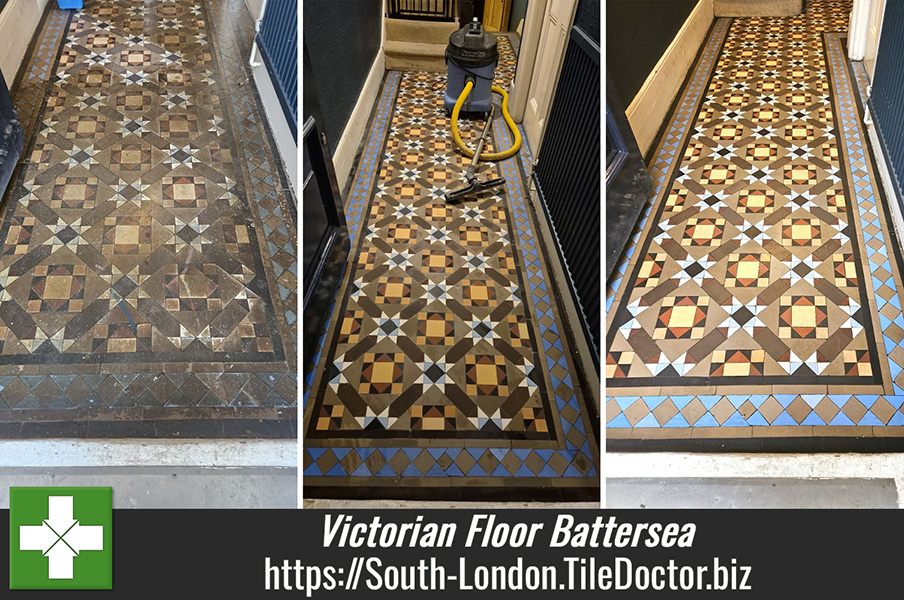
Victorian Tiled Hallway Floor Restoration Battersea

Badly Stained Victorian Tiled Hallway Floor Restored in Battersea

This customer from Battersea discovered a beautiful Victorian tiled floor under the hallway carpet after moving in. The carpet had been secured with thick glue and over the years had accumulated ingrained dirt, multiple sealers, and layers of accumulated grime.

Victorian Tiled Hallway Floor Before Restoration Battersea

Having visited the property to survey the floor and quote for its restoration I could see it wouldn’t be an easy job. Tests revealed that as well as the glue the tiles had built up several layers of coatings over the years that would need careful attention and repeated scrubbing to remove. That being said the tiles were in good physical condition, and we were confident the floor could be restored to a good standard.

I worked out detailed quote for the work which was accepted and a date agreed for the work to start.

Restorative Cleaning of a Neglected Victorian Tiled Hallway

The restoration process began with a thorough deep clean using Tile Doctor Pro-Clean, an alkaline Tile and Grout cleaner designed to tackle tough stains and dirt. This step was essential to break down the initial layer of grime and dirt, preparing the floor for the removal of old sealers and coatings.

Pro-Clean is ideal for heavily soiled surfaces and when used in a more concentrated form helps to loosen and remove stubborn dirt and residue. The product was applied to the floor, allowing it to dwell and break down the dirt before agitating the surface with a scrub brush. Afterward the floor was rinsed with water, and the now soiled solution was removed with a wet-dry vacuum to ensure no residue was left behind.

To tackle the old sealers and coatings (including adhesives) that had built up over time Tile Doctor Remove & Go was applied. This is a powerful stripper designed to break down and lift off multiple layers of coatings, including synthetic finishes, waxes, and adhesives.
Remove & Go is a non-flammable, multi-purpose stripper with a long dwell time, making it ideal for tough jobs like this one. It draws out ingrained stains and removes grease build-up as it strips away old coatings, preparing the surface for a fresh application of sealer.

A strong dilution of Remove & Go to was applied to the Victorian tiles in small sections allowing to sit for ten to fifteen minutes to soften the coatings before scrubbing with a stiff brush. The residue was so thick in parts it had to be wiped off with paper towels before the wet vacuum could be used to remove the bulk of the stripper. This step took some time, as multiple applications were needed due to the layers of sealers, but it was crucial to ensure the surface was properly prepped.

Victorian Tiled Hallway Floor During Glue Removal Battersea

In some areas, the stripper was not fully effective, and the coatings remained stubbornly in place. For these spots, we had to manually scrape off the remaining layers to ensure the surface was completely free from old coatings. It was a labour-intensive process, but it was necessary to ensure the tiles were thoroughly prepped for the next steps of cleaning and sealing.

Once the sealers and coatings were removed the focus turned to tackling the heavy build-up of dirt, grime and dirt ingrained into the tiles. For this Tile Doctor NanoTech HBU (Heavy Build-Up Remover) was applied, a product designed to penetrate deep into surfaces and breakdown the most stubborn dirt and bring it to the surface. NanoTech HBU uses nano-sized particles to dissolve and lift out embedded dirt, waxes, floor finishes, and grout residue that regular cleaners struggle to remove.

The NanoTech HBU was applied directly to the surface and allowed time to penetrate and break down the build-up. After allowing it to dwell, the surface was agitated with a black pad and scrub brush. Once the residue was loosened, we used the wet-dry vacuum to remove the solution and rinse the area thoroughly with clean water.

After the deep cleaning and heavy build-up removal, the floor was rinsed thoroughly to ensure all cleaning products and residue were completely removed. We used fresh water and a clean mop to wash the surface and removed any leftover residue with the wet-dry vacuum. This was an important step to ensure the floor was completely prepped and ready for re-sealing.

Victorian Tiled Hallway Floor During Cleaning Battersea

Sealing a Victorian Tiled Hallway

The floor was left for a couple of days to give it time to dry out and then work resumed to add a fresh, protective sealer. It’s essential to allow the tiles to dry completely to ensure the sealer adheres properly and performs as expected.

We recommended Tile Doctor’s Colour Grow for this Victorian tiled floor because this product is designed to enhance the natural colour of the tile whilst providing long-lasting protection. Colour Grow is an impregnator that works by soaking into the pores of the tile protecting it from within and thereby keeping dirt on the surface where it can be easily cleaned away.

After applying the Colour Grow, the sealer was left to cure, allowing the sealer to fully penetrate and protect the tiles. This final step ensured that the Victorian tiles were not only restored to their original beauty but also sealed for long-term protection.

Victorian Tiled Hallway Floor After Restoration Battersea

After completing the restoration, the results were stunning. The Victorian tiled floor that was once covered in layers of grime and sealers, now shone with vibrant, clean tiles and fresh grout lines. The customer was thrilled with the outcome, as the tiles looked brand new while maintaining their original charm. The owner could not believe the transformation. They were thrilled to see their beautiful Victorian tiles restored to their original charm and ready to enjoy for years to come.

For aftercare I recommended they used Tile Doctor Neutral Tile Cleaner which is a mild yet effective tile cleaner that won’t affect the sealer which can be the problem with stronger products.


Professional Restoration of a Victorian Tiled Hallway in London

Badly Stained Victorian Tiled Hallway Floor Restored in Battersea Read More »

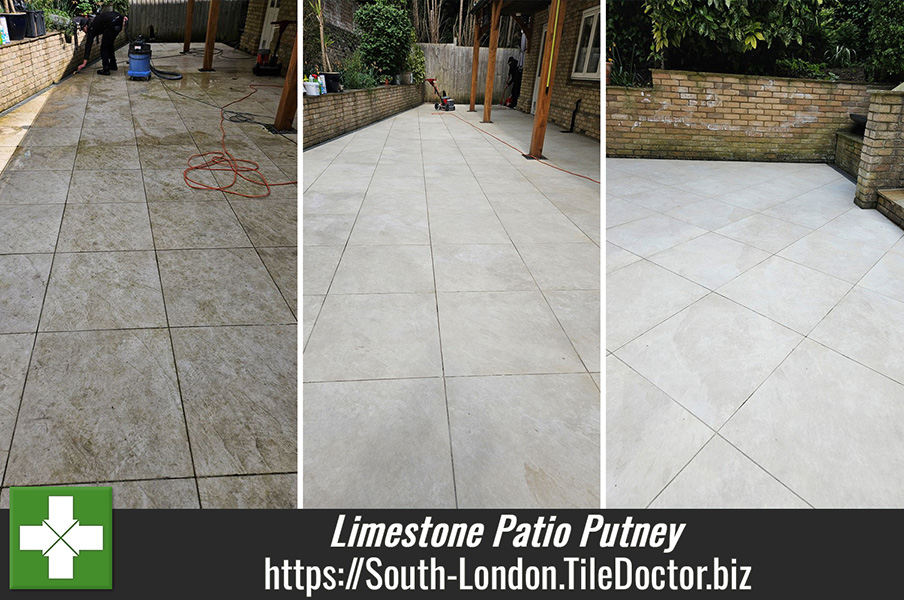
Limestone Patio Renovation Putney

Renovating a Dirty Limestone Patio in Putney

This work was conducted earlier in the year when I was contacted by a previous client from Putney who needed help renovating their Limestone tiled patio. I usually work on indoor stone floors so I didn’t anticipate any issues apart from having to contend with the weather.

Limestone Patio Before Cleaning Putney

I went over to survey the patio and come up with a renovation plan. I could see the Patio was in good physical shape but it had a lot of green algae staining and was generally very dirty with ingrained dirt. After measuring up and working out a renovation plan I was able to email over a quote which was accepted and a date scheduled for the work to start.

Limestone Patio Before Cleaning Putney

Deep Cleaning a Limestone Patio

Work started by giving the whole area a thorough wash to clear any grit and general dirt using a pressure washer and extracting the slurry with a wet vacuum. It was a large area so the work was done in sections.

Working in sections again the next was to burnish the limestone starting with a coarse 400-grit diamond pad which is applied with water for lubrication. This coarse pad opens the pores in the stone allowing the ingrained dirt to be flushed out. The soiling was extracted with the wet vacuum and work progressed onto the next pads which are a finer 800 and 1500-grit. Again, water was used for lubrication and the soiling extracted after each pad was applied. These finer pads slowly close the pores in the stone and refine the appearance of the stone building up a lovely finish on the Limestone.

Limestone Patio Renovation Putney

The next step was to clean the grout using a dilution of Tile Doctor Pro-Clean scrubbing them by hand with a stiff brush. The pads do a good job of cleaning the stone but can struggle to reach into the recesses of the grout line.

After another extraction with the wet vacuum the last pad in the set was applied to the patio as before which is a very fine 3500-grit that adds the final polish to the Limestone. This pad is applied dry with only a little water sprayed onto the tile.

Sealing a Limestone Patio

Once the patio was dry it was sealed using Tile Doctor Ultra-Seal which is a natural look sealer that will protect the stone from dirt becomes ingrained in the stone. The sealer soaks into the pores of the stone preventing dirt from residing there and keeping it on the surface where it can be easily rinsed away.

Limestone Patio Renovation Putney

Once complete the patio looked like a new installation and the new sealer will help it stay that way for many years to come.

Limestone Patio After Renovation Putney


Professional Renovation of a Limestone Patio in London

Renovating a Dirty Limestone Patio in Putney Read More »

Neglected Victorian Tiled Floor Restoration in Kensington

Deep Clean and Restoration of a Victorian Tiled Hallway Floor in Kensington

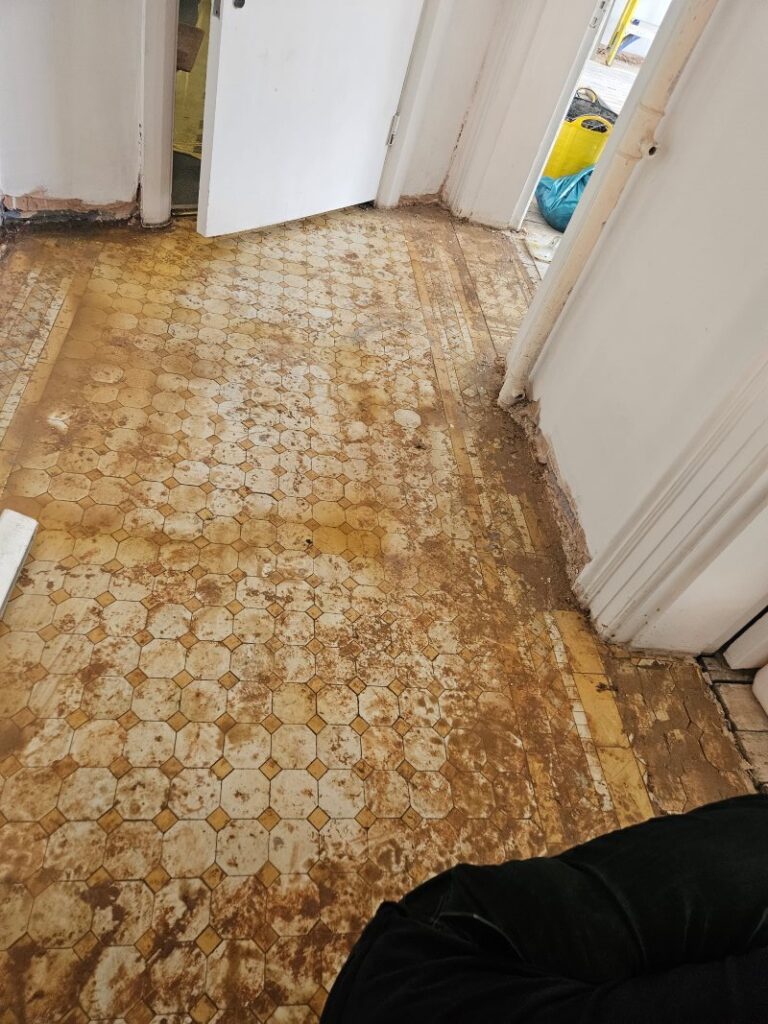
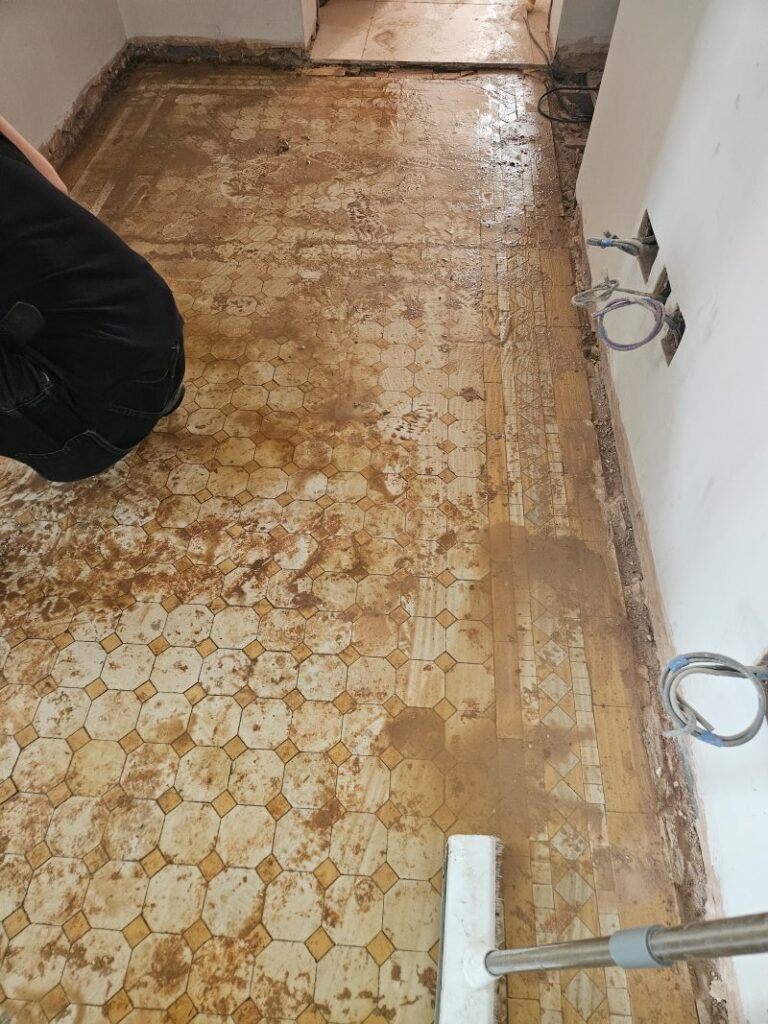
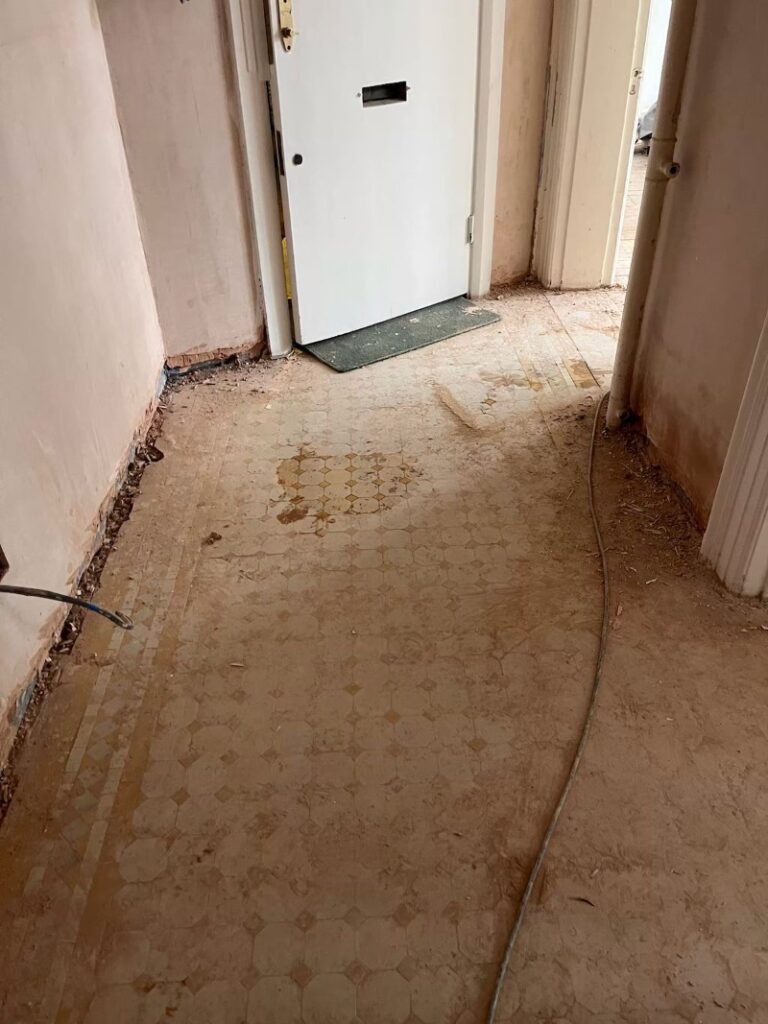
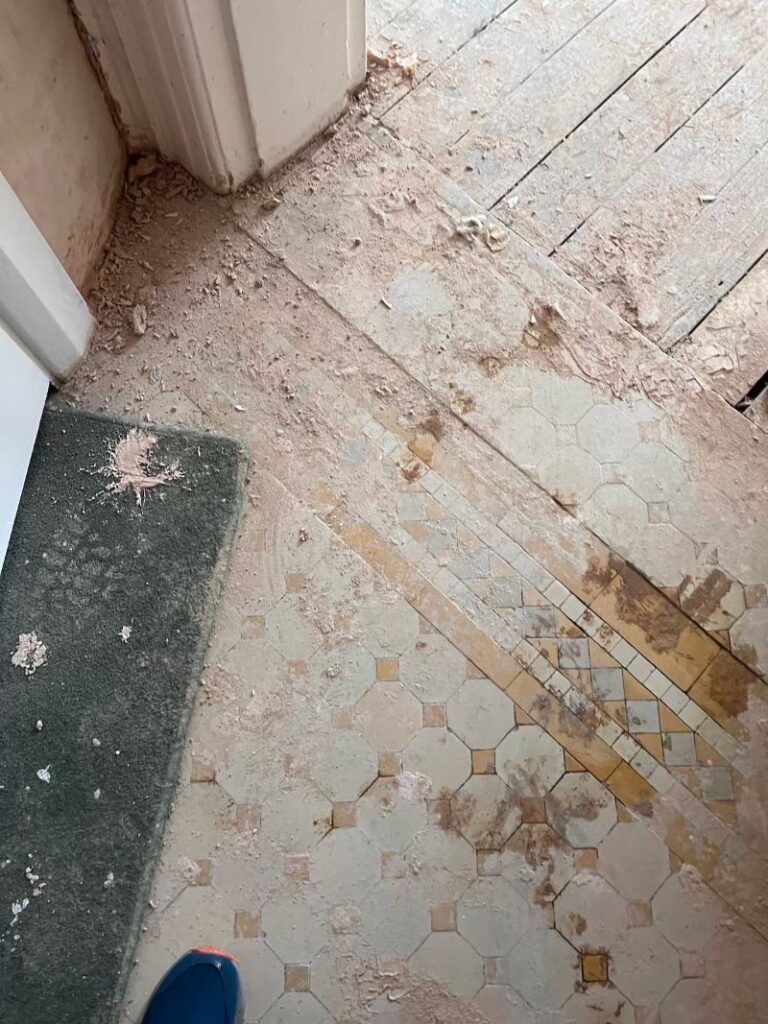
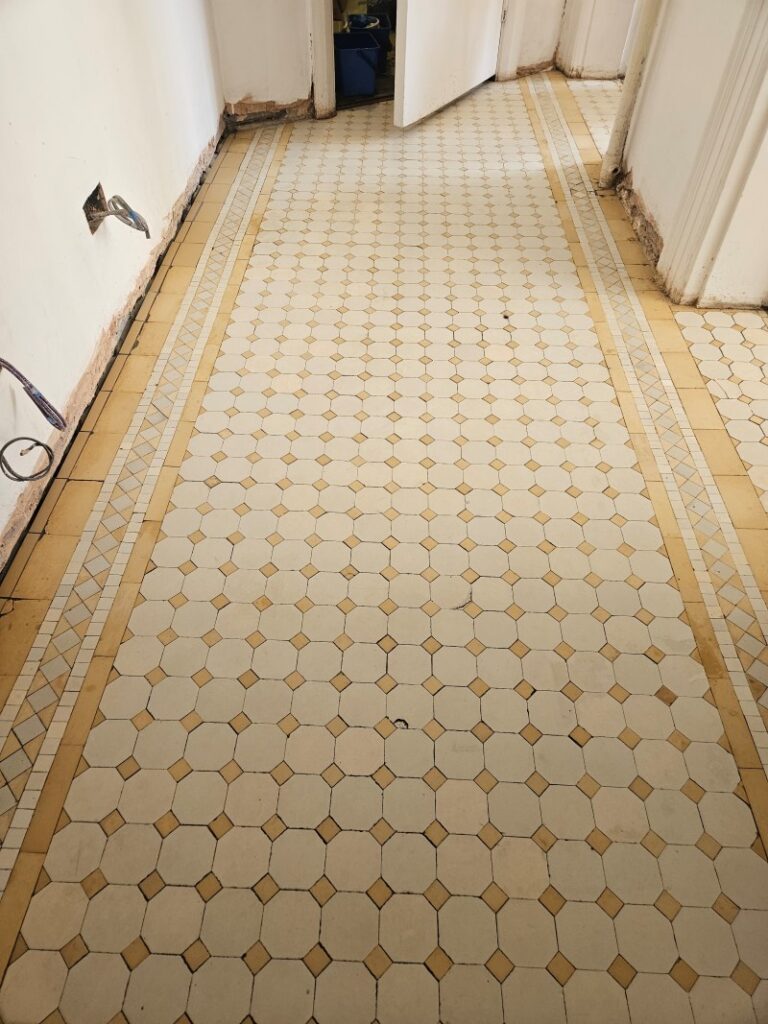
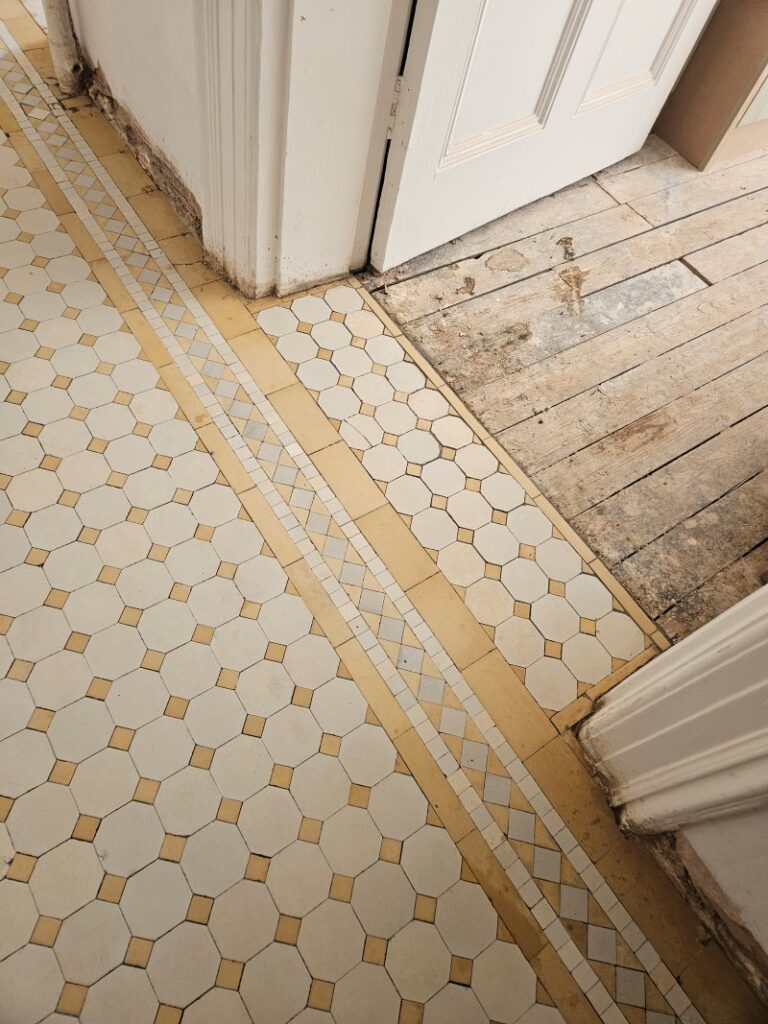
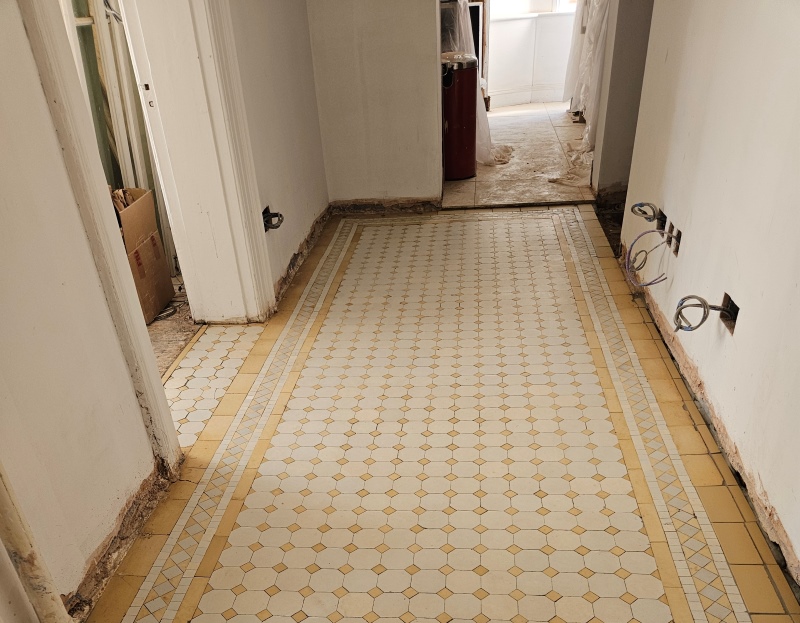
The photographs below are of a Victorian tiled floor at a property across the Thames in Kensington which as you can see was in quite a poor state, especially along the edges. The property was being renovated and the walls recently plastered following a rewire resulting in all sorts of building materials being trod into the tiles leaving them looking very neglected.

Neglected Victorian Tiled Floor Before Restoration Kensington Neglected Victorian Tiled Floor Before Restoration Kensington

The biggest problem were the border tiles where many had become damaged and cracked over the years. It would be a straight-forward task to replace them however, and I was confident of finding matching replacements.

Neglected Victorian Tiled Floor Before Restoration Kensington Neglected Victorian Tiled Floor Before Restoration Kensington

I worked out a quote for the work which would include replacing the damaged tiles, deep cleaning the floor and then sealing to protect it. The quote included sourcing replacement reproduction tiles for which there are several suppliers, and I was confident that after a clean and seal the new tiles would blend in well with the original.

Cleaning and Restoring a Victorian Tiled Hallway

The room was completely empty due to the house being renovated so I was able to crack straight on starting by giving the floor an initial clean using Tile Doctor Oxy-Gel. Normally I would do the repairs first but with the floor being so dirty I wanted to be sure I could see all the tiles that needed replacing.

Old Victorian floors don’t have the benefit of a damp proof membrane so it’s important to keep the use of water to a minimum and avoid the appearance of white efflorescent salts which can rise through the tile as it dries. The gel was applied neat to the Victorian tiles and allowed to soak in for about ten minutes before being worked in using a 200-Grit pad fitted to a rotary buffer. The combination of the coarse pad and the cleaning gel does a good job of bringing the dirt to the surface where it was then removed with a wet vacuum.

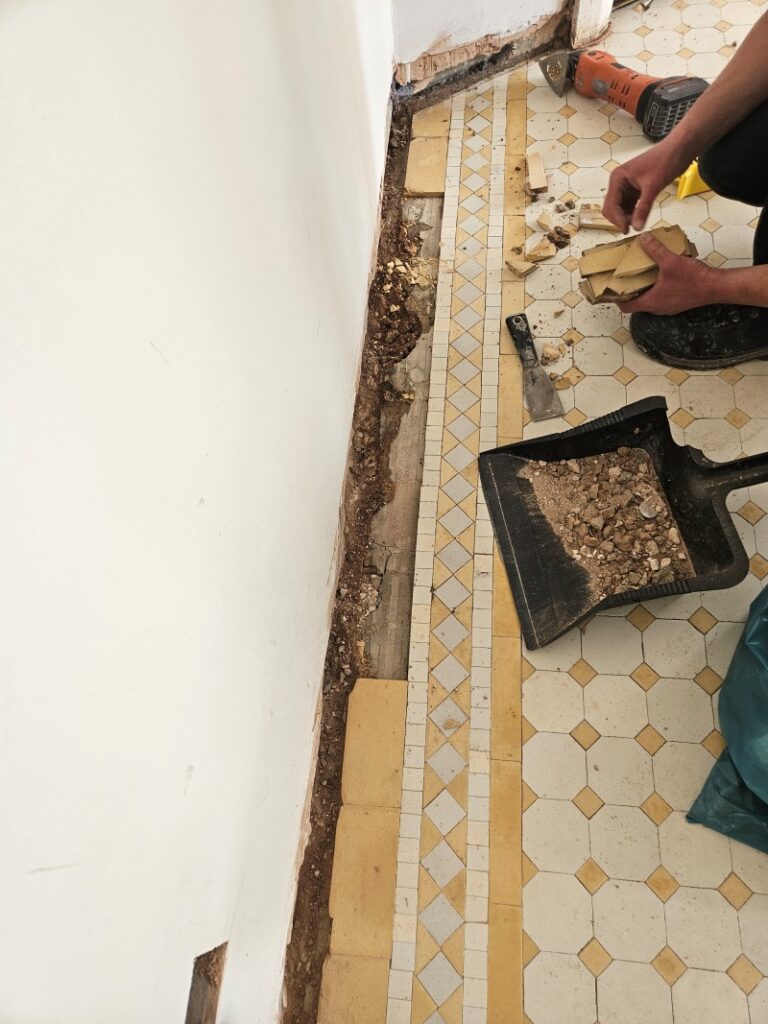
Neglected Victorian Tiled Floor During Repairs Kensington Neglected Victorian Tiled Floor During Repairs Kensington

With the floor clean I set about removing the broken tiles which was done carefully to avoid disturbing more tiles than necessary. The rubble was removed, and the foundation was rebuilt with self-levelling compound to the correct level. Once that had set, the replacement tiles were shaped and secured in place with fresh adhesive and grout. When complete I left for the day to allow the repairs to set overnight.

The following day I completed the cleaning process using another gel product called Tile Doctor Acid Gel. The acidic nature of the product also neutralises any salts that may be present and then leaves a microscopic etch on the clay tiles which helps to achieve a better bond with the sealer. The gel was then rinsed off and extracted as before and the floor left to dry off overnight.

Sealing a Victorian Tiled Hallway

The next day we started sealing the floor with Tile Doctor Colour Grow. This is a fully breathable sealer which is an important feature when sealing old floors like this, it also contains a colour enhancer. The sealer protects the tiles from ingrained dirt ensuring it remains on the surface where it can be easily cleaned away.

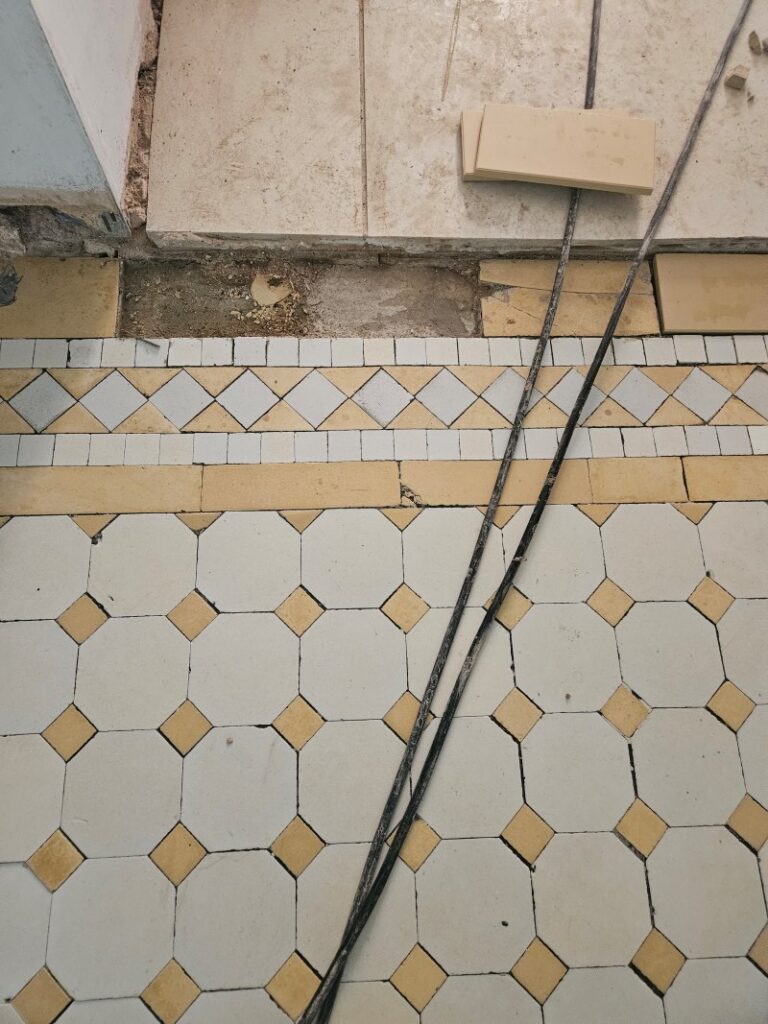
Neglected Victorian Tiled Floor After Restoration Kensington Neglected Victorian Tiled Floor After Restoration Kensington

Once complete the floor was completely transformed and unrecognisable from before, hopefully the decorators who will be working on the property next will ensure it stays that way. For aftercare cleaning I recommended using Tile Doctor Neutral Tile Cleaner which is a mild yet effective tile cleaner that’s designed for use on sealed floors.

Neglected Victorian Tiled Floor After Restoration Kensington


Professional Restoration of a Victorian Tiled Hallway in London

Deep Clean and Restoration of a Victorian Tiled Hallway Floor in Kensington Read More »

Bleached Slate Tiled Courtyard Restored Roehampton

Restoring the Appearance of Black Slate Tiled Courtyard in Roehampton

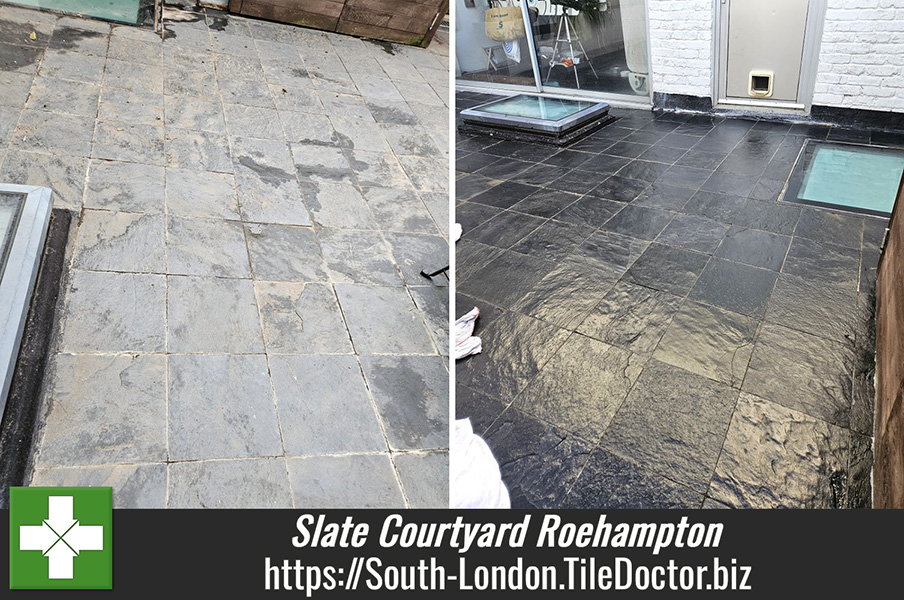
Here we have a Slate tiled courtyard at a property in Roehampton SW15 that had been installed 20 years prior and clearly not received much love since. The main issue was the grouting which was cracked in places and water had been leaking into the basement below. I suspect the Slate had been previously cleaned with a strong acidic patio cleaner as the stone had lost all its colour and looked bleached.

Slate Tiled Courtyard Before Cleaning Roehampton Slate Tiled Courtyard Before Cleaning Roehampton

The owner contacted me to see what could be done and once it was clear these were originally black slate tiles, I knew exactly what to do to restore the colour and put the life back into the floor. I discussed the restoration process with the owner and worked out a quote for the work. Happy to have finally found a solution I was given the go ahead and a date set for the work to start.

Slate Tiled Courtyard Before Cleaning Roehampton Slate Tiled Courtyard Before Cleaning Roehampton

Cleaning and Repairing a Slate Tiled Courtyard

I started by removing the cracked and failing grouting and replaced it with a modern epoxy jointing compound normally sold for paving. There were a lot of grout lines to cover so it took some time to complete. The floor was then left to set before moving onto the next stage of cleaning.

To clean the Slate tiling I applied a strong dilution of Tile Doctor Pro-Clean and left it to soak in for ten minutes before scrubbing it in with a carbide brush fitted to a rotary machine. The dirt released from the tiles was then rinsed away and extracted with a wet vacuum. The floor was then inspected and the process repeated where needed until I was happy the Slate was as clean as it could be.

Sealing a Slate Tiled Courtyard

The floor was then left to dry off again and I returned later to seal the tiles when the weather was dry. I used Tile Doctor X-Tra Seal for this, in fact it was a perfect choice as its suitable for external use and is an oil-based sealer which is exactly what the slate needed to restore the black colour to the stone.

Slate Tiled Courtyard After Renovation Roehampton Slate Tiled Courtyard After Renovation Roehampton

For aftercare I advised the use of Tile Doctor Neutral Tile Cleaner which is a mild but effective tile and grout cleaner that won’t impact the sealer. The floor looked great, and my client was very happy with the completed project.


Professional Restoration of a Slate Tiled Courtyard in South London

Restoring the Appearance of Black Slate Tiled Courtyard in Roehampton Read More »

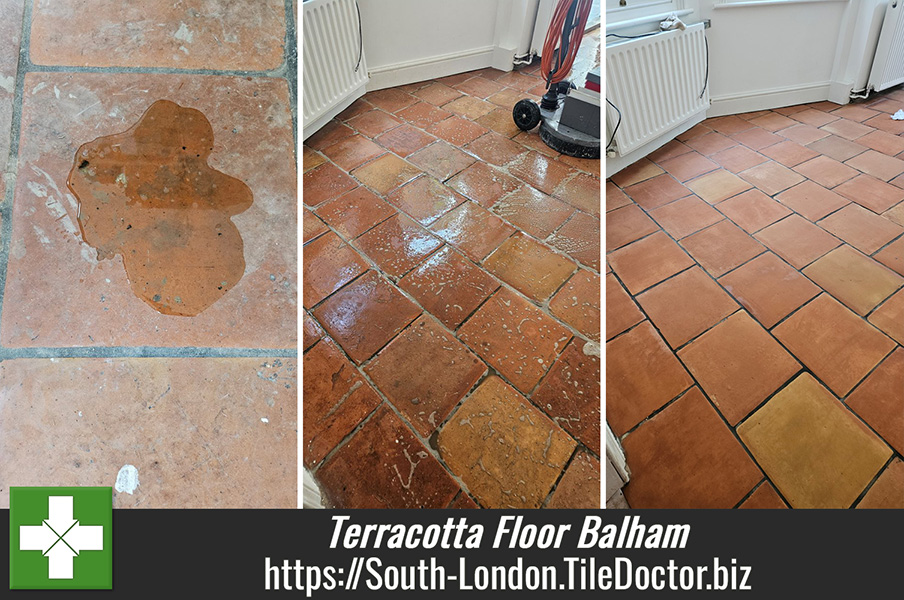
Terracotta Tiled Kitchen Floor Renovation Balham

Dirty Terracotta Tiled Kitchen Floor Renovated in Balham SW12

The photographs below show the condition of a heavily soiled Terracotta tiled kitchen floor at a residential property in Balham, SW12, which I was recently commissioned to renovate. The client had several outstanding tasks related to the renovation of the property, but the kitchen floor was the most urgent due to its significant level of soiling. The client described the condition of the floor as “VERY dirty” and in immediate need of professional attention.

During an initial site visit, I conducted a thorough inspection of the floor. It became clear that the contamination was largely the result of recent renovation work carried out by other tradespeople. A cleaning test confirmed that the floor would respond positively to deep cleaning. I also identified that a sealer had previously been applied, but to restore the floor to a satisfactory standard, a deep and intensive cleaning process would be necessary, followed by resealing.

Terracotta Tiled Kitchen Floor Before Renovation Balham Terracotta Tiled Kitchen Floor Before Renovation Balham

Following this assessment, I prepared a detailed quotation for the renovation work, which was approved by the client. A suitable date was then agreed for the commencement of the job.

Deep Cleaning a Terracotta Tiled Kitchen Floor

Upon returning to the property, I began the renovation by carrying out a deep cleaning of the Terracotta tiles and grout lines. For this, I used a strong dilution of Tile Doctor Remove and Go, combined with Nanotech HBU to maximise effectiveness. The solution was agitated into the surface using a rotary floor machine fitted with a coarse carbide brush.

Terracotta Tiled Kitchen Floor During Renovation Balham

The floor was then rinsed thoroughly, and the resulting slurry extracted using a wet vacuum. I carefully inspected the tiles and grout after the first pass, and any areas with persistent staining were retreated using the same method. To ensure a thorough clean of the grout lines, I applied a strong solution of Tile Doctor Pro-Clean, which I worked in manually using a hand-held scrubbing brush until the grout reached an acceptable standard.

Terracotta Tiled Kitchen Floor During Renovation Balham

The floor was rinsed multiple times throughout the cleaning process, with each rinse followed by slurry extraction using the wet vacuum. After the final rinse, I used the vacuum once more to remove as much residual moisture as possible.

Sealing a Terracotta Tiled Kitchen

Before sealing, I tested the floor with a damp meter to ensure it was completely dry. Once confirmed, I applied several coats of Tile Doctor Colour Grow. This sealer contains a colour-enhancing formula that accentuates the natural orange and red tones typical of Terracotta.

Terracotta Tiled Kitchen Floor During Sealing Balham

Tile Doctor Colour Grow is an impregnating sealer that penetrates the surface of the tile, filling the pores to prevent the ingress of dirt and moisture. This ensures easier maintenance and provides long-term protection, while preserving the natural matte appearance of the tiles — an important requirement expressed by the client.

The transformation was remarkable. The client was extremely satisfied with the result, stating that the floor now “looks like new.”

Terracotta Tiled Kitchen Floor After Renovation Balham Terracotta Tiled Kitchen Floor After Renovation Balham

For ongoing maintenance, I recommended the use of Tile Doctor Neutral Tile Cleaner. This pH-neutral product is specially formulated to clean sealed tiles without degrading the protective sealer. I advised against using standard household cleaning agents, as many are too aggressive and can compromise the integrity of the sealer over time.


Professional Restoration of a Terracotta Tiled Kitchen Floor in South London

Dirty Terracotta Tiled Kitchen Floor Renovated in Balham SW12 Read More »
╳
Scroll to Top